
Barker Family Mediation
Professional Mediation Services
Family Mediation
When conversation grows difficult, a structured and supportive space can make all the difference. Barker Family Mediation offers a neutral, respectful environment where families can speak freely, listen deeply, and move toward workable arrangements — together.

Few families anticipate arriving at a moment when conversation grows difficult. Most relationships start with shared plans, joint responsibilities, and a sense of moving forward together. Over time, however, things can change. Pressures build. Communication can slowly break down. While this may have seemed straightforward, it might soon become complicated and emotionally weighty.
When families navigate separation, disagreement, or uncertainty about the future, many have discovered that everyday conversations become surprisingly difficult. Talking about parenting, daily routines, money responsibilities, or living arrangements can easily lead to a fight. Even when both sides want a practical resolution, the emotional weight of the situation can make that challenging.
This is the kind of situation where a structured conversation can help make an impact.
Barker Family Mediation offers an evidence-based approach to families enjoying calm, backed discussions in a neutral space. Instead of getting into a fight over who is right or wrong, mediation lets people talk through the issues that matter and brainstorm possible, workable paths forward.
It is not about erasing differences or mandating agreement. Each family will have its own perspective, always. In contrast, mediation removes those accusations and creates an environment where those views can be articulated clearly, heard with respect, and considered thoughtfully.
For many people, just having a chance to speak freely without interruption is an important first step. When conversations turn into slower, more structured discussions, it often becomes easier to transition from frustration to practical thinking.
When conversations become possible again, families often find that solutions that had previously felt impossible can slowly coalesce.
Mediation in the family is most commonly used, but it can be useful in many other situations where tensions or communication have broken down. Some families seek assistance in talking through parenting plans. Others wish to fix financial problems tied to family life. Some want a more peaceful way to discuss the future.
What matters is that the process promotes civility.
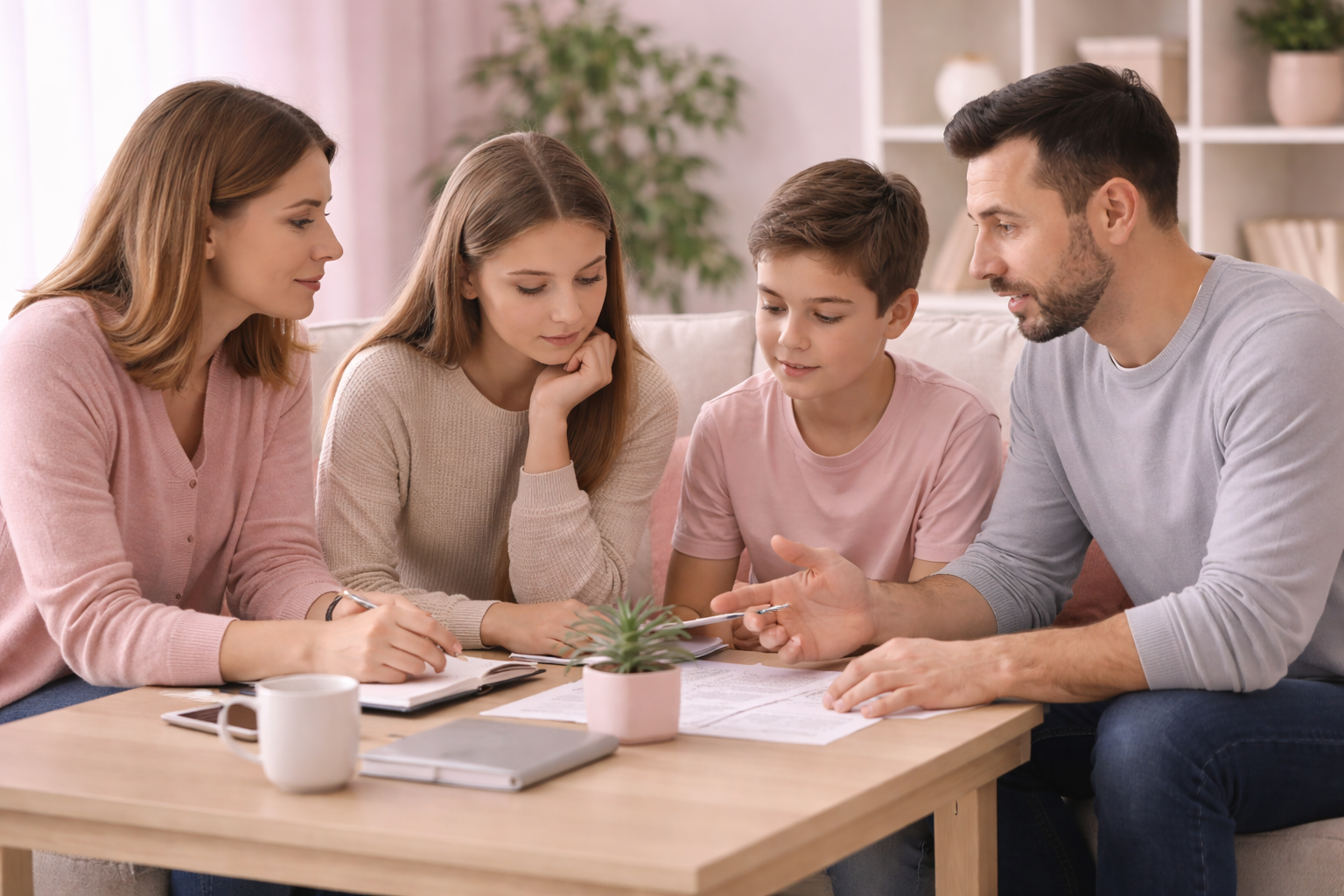
Though the term mediation has reached many ears, not everyone knows what it really is. The practice of mediation is really just a structured conversation, facilitated by a neutral professional to help guide the dialogue.
The mediator remains neutral and doesn't pick sides. They are not there to assess or make determinations. Instead, they help create a calming atmosphere in which both individuals get to express their grievances, hear each other's thoughts, and work towards potential solutions together.
A guided conversation so everyone has space to talk and be heard. All of the issues are not discussed at once, but one by one. Having a mediator helps keep the discussion focused and constructive when emotions run high.
Rather than rehashing past conflicts, mediation prompts families to consider practical arrangements in the future. That might include how you will share parenting responsibilities, make decisions, or maintain stability in everyday routines.
In many family dynamics, discussions become hard because conversations happen in emotionally intense moments. People may interrupt each other. Frustration can cloud important points. Misunderstandings may grow over time. Mediation slows that process down.
It is not a process of imposing agreement. You can still have ambivalence sometimes. What mediation does provide is space to discuss those differences civilly and brainstorm possible solutions that work for all parties involved.
These conversations can slowly change the tone of communication over time. What starts out as a tough conversation can gradually turn into a more cooperative sharing of ideas. That change in communication often becomes one of the most needed outcomes of mediation.
So-called family life can take many forms, and no two families face the same challenges. Mediation is built to be flexible, so it can serve conversations in a variety of contexts.
When relationships shift, families often need to decide on household arrangements, parenting responsibilities, and financial matters related to family life. Having these discussions can feel daunting, especially with emotions still running high. Mediation gives those discussions a formal context, with calm and reasoned space to occur.
Parents who live separately usually want their children to experience stability and support. School routines, holidays, communication, and day-to-day care decisions can all be discussed thoughtfully in mediation sessions — keeping children at the heart of every decision.
Certain disputes are not over one single topic, but the manner in which discussions progress. Misunderstandings can build over the years, and even basic conversations can become challenging. Mediation helps return a clearer way of speaking and listening.
Families may at times need to discuss how various responsibilities will be divided going forward. Although these conversations can seem sensitive, a structure makes them more approachable and less emotionally charged.
In some cases, grandparents or other relatives are still important figures in children's lives. These relations can be approached thoughtfully in mediation discussions, giving space for nuanced and respectful conversations.
Transitions after separation might also introduce new questions. As children age or situations change, living arrangements may need to shift. Mediation creates a space to facilitate these conversations in an orderly, open manner.
Every family has its own story, and every family has its own priorities. Barker Family Mediation is crafted to accommodate those differences and is responsive to individual needs, while providing a consistent focus on respectful dialogue and practical results.

When disagreements become challenging, conversations tend to go out of balance. People may begin speaking defensively, preemptively anticipating criticism — which is a deeply human response, and one that makes genuine conversation more difficult.
A neutral site alters that dynamic.
An important benefit of mediation is that it creates a structure where both individuals talk and listen. It shifts the context from reacting in that very moment to understanding what the other person is actually saying.
Mediation sessions encourage people to express their thoughts transparently. They are allowed the time to share concerns that might have been hard to address previously. At the same time, they are invited to listen attentively to the other person's perspective.
This give and take frequently alleviates the anxiety that attends so many disagreements within families.
People tend to return the favour of feeling heard when they themselves feel heard. The conversation then shifts from defending positions to finding possibilities.
Neutral conversation also provides families with a buffer from patterns of conflict that may have emerged over the years. Structured discussions lead to better clarification and addressing of assumptions in a much calmer manner.
Over time, this change in communication can make it easier for all families to shift toward finding practical solutions that more accurately represent the concerns of everybody involved.
Children are often the most pressing topic for families. When relationships shift, parents understandably want to know that their children will still find stability, support, and routine in their lives.
Barker Family Mediation enables parents to discuss ongoing matters of daily life that impact a child's experience of family life. These conversations could pertain to school routines, extracurricular activities, holiday schedules, or communication between households.
Because the conversation is structured and balanced, parents often find it less difficult to focus on their children's needs than to engage in old disagreements. A child-focused perspective is a critical component of mediation. And once the parents stop being angry at each other, concerns about joint decisions are often overridden when deciding what is best for the children.
Mediation promotes structured discussion about how routines will play out in practical terms. Parents are able to explore options that offer their children continuity in life while honouring the realities of a family transition.
When these conversations take place in a calm manner, they usually yield clearer and more workable arrangements. Children thrive with an idea of what's ahead, and parents get a structure that can help quell uncertainty. By producing ideas that help with the practical nature of life, they gradually build a sense of stability for their whole unit.
It can help to know about how mediation normally unfolds for those who have not been through it before.
The process begins with opening discussions that clarify for all parties what mediation entails and its general structure. These early conversations are a way to explain how the process works and what participants might expect — providing an accessible and reassuring foundation before sessions begin.
When mediation sessions commence, the emphasis shifts toward understanding each person's view. Both are invited to describe the issues that speak most to them. The mediator helps to keep these explanations structured and respectful, and free from interjection, ensuring that every voice has full space to be heard.
After having heard the important topics to cover, the collaborative phase begins — discussing options, exploring alternatives, and considering how practical arrangements could play out in real life. Sessions proceed at a moderate pace, allowing for careful reflection. No one is asked to work it all out overnight.
While many families start off in opposing camps, over time, as conversations progress, many find common ground and feel there are areas where compromise might be possible. Such agreements might pertain to parenting practices, communication protocols, or other aspects of family dynamics. In the end, speed is not the goal — clarity is.

One of the most significant aspects of mediation is a feeling of safety around conversation. A structured setting gives people comfort to speak their minds. They understand that the dialogue will be conducted respectfully and that both sides of the discussion will receive commensurate treatment.
Family discussions transcend beaming faces and wishes of good things to come; emotions are only natural when change is at hand. Mediation, however, does not say these emotions do not exist. It lets them come out, rather than flood the conversation.
The mediator guides the meeting's tone, ensuring a respectful dialogue. If things get heated, the mediation framework helps move the conversation back on track.
This combination of emotional awareness and pragmatic discussion is what makes mediation so valuable when families are involved. They are not asked to repress their emotions. It's just about encouraging them to talk about those feelings so that progress continues.
Emotional safety and practical focus are not opposites — in mediation, they work in concert, creating conditions where real and lasting progress becomes possible.
Some families come to mediation feeling that communication has completely broken down. Conversations may have devolved into recurring fights. Efforts to have very serious discussions could be frustrating. When this happens, it can seem as if meaningful dialogue is impossible.
Mediation offers a different point of origin. Rather than repeating old patterns of disagreement, the process introduces a structured way of communicating. Each person is allowed to speak without interruption. And a mediator helps to clarify important points as they are made.
This methodical approach often de-escalates the conflict. As time goes on, conversations that might have felt impossible will feel feasible again for some people. Incremental improvements in communication unlock opportunities for additional progress.
Each family has its own structure and its own narrative. No two situations are identical, and the dynamics in one family may differ greatly from another. Some households are blended, with the kids dividing their time between two homes. Others include close and nurturing connections with grandparents or other relatives. Others are adapting to new living situations while co-parenting and staying engaged with their kids' schedules.
This diversity of approaches calls for flexibility in mediation. Family situations tend to involve layers of practical, emotional, and logistical considerations. What works for one family doesn't necessarily work as well for another. Mediation grasps this fact and lets the conversations unfold within the unique context of the parties involved, rather than within strict parameters.
Barker Family Mediation works with conversations tailored to each family — one that reflects the unique experiences and priorities of that family. When entering mediation, the issues being addressed are determined by what people bring into the room. For some families, keeping up with parenting schedules and consistency for kids is the focus. For some people, the conversation might focus on communication challenges or figuring out a more equitable way to divide responsibilities.
This flexibility means that mediation can apply to a variety of family situations. It opens up space for careful conversation about what arrangements really work for the people involved, rather than applying one-size-fits-all tinkering to every situation.
In blended families, mediation might facilitate conversation about how new family bonds fit into already established patterns of interaction. When grandparents or extended family are still very much involved, conversations can acknowledge that role and how those connections might continue to support children. Mediation can help families develop arrangements that honour not only independence but also shared responsibility during a separation.
Because life is ever-changing, flexibility also allows families to reopen discussions if situations shift. Children's ages, schedules, and new priorities can change over time. Mediation offers a process that can respond to these developments and help families adapt.
This flexible approach ultimately acknowledges a key insight: families are complicated and don't always respond to simple formulas. Allowing for diverse perspectives and practical realities, mediation helps families forge arrangements that are realistic, respectful, and sustainable.
Family mediation is a structured, facilitated conversation between two or more parties, guided by a trained neutral professional. Rather than attending a court or adversarial setting, mediation provides a calm, respectful space where families can openly discuss the issues that matter most to them and work toward arrangements that reflect the needs of everyone involved. It is not about winning or losing — it is about finding workable, practical solutions together.
No. The mediator remains strictly neutral throughout the process. Their role is to guide the conversation — to ensure both parties have equal opportunity to speak, to help clarify misunderstandings, and to keep discussions focused and respectful. The mediator does not offer opinions, make judgements, or decide outcomes. All decisions rest with the participants themselves.
Yes. In fact, many families come to mediation precisely because direct communication has become too difficult or emotionally charged. The structured nature of mediation introduces a different starting point — one where each person has space to speak without interruption, and where a neutral facilitator helps ensure the conversation stays on course. Over time, even highly fractured communication can begin to improve through this methodical, supported process.
Mediation is flexible and can address a wide range of concerns. Common topics include parenting arrangements, school routines and holiday schedules, financial responsibilities connected to family life, communication practices between households, and transitions that arise as families evolve. Extended family relationships — such as the role of grandparents — can also be explored thoughtfully within the process.
Every family is different, and the number of sessions depends on the complexity of the issues involved and the pace at which participants feel comfortable progressing. Mediation is designed to proceed at a considered pace — allowing for reflection and incremental progress rather than rushed decisions. The goal is always clarity, not speed, ensuring that any arrangements reached feel well-considered and sustainable for everyone involved.
Absolutely. Family life continues to evolve — children grow, circumstances shift, and new situations arise. Mediation is not a one-time solution but a process that can be revisited when needed. Many families find it helpful to return to structured conversation when changes occur, rather than allowing new tensions to accumulate. The communication skills developed during mediation can also support more natural ongoing dialogue in the long run.
Even though mediation involves practical discussions, it offers a truly human experience. Many families say they feel a sense of relief when the conversations start to settle — an opportunity to speak openly, listen carefully, and explore solutions together that lead to renewed clarity.
Family relationships are complex. They require sharing of experience, feelings, obligations, and future expectations. At times, it can feel like all those connections get lost in conflict when life gets hard. Mediation provides a path to reclaiming the possibility of constructive discourse.
Through steady conversation, thoughtful listening, and exploring potential solutions without urgency or alarm, families can slowly work from a position of disagreement toward one of practical understanding.
This is reflected in everything Barker Family Mediation stands for. It is not about winning arguments or placing blame. It is about building a space where people can communicate openly, listen deeply, and strive toward agreements that sustain the best interests of all.
Every family that comes through the process receives the same consistent foundation: a neutral space, an impartial facilitator, and a genuine commitment to making sure every voice is heard without prejudice or judgement.
Because no two families are the same, our approach is never formulaic. The conversations that take place are shaped by what the participants bring into the room — their priorities, their concerns, and their hopes for the future.
Our evidence-based approach is grounded in what is known to work — calm, structured dialogue that prioritises practical outcomes alongside emotional wellbeing. That combination is what allows lasting, meaningful change to take root.

One of mediation's most important results is looking ahead more clearly. If you are currently in the midst of a conflict or separation, it is understandable that the future feels vague and difficult to visualise.
For the spouse moving out, questions about day-to-day routines, parenting arrangements, and communication may linger unaddressed, creating uncertainty that can be stressful for all parties involved. Mediation slowly focuses those questions until families can start to see a clearer trajectory forward.
As conversations progress in a structured setting, families can shift from reacting to current issues toward considering more carefully what the future might hold. Rather than stressing momentary pains, mediation offers a loftier view. It enables people to reflect on the decisions that are being made today and how various aspects of daily life may be shaped months or years down the line. This is a powerful shift because it reorients people to focus on long-term well-being rather than short-term disagreements.
When constructive agreements start to take shape — around parenting schedules, household communication, and daily routines — the confusion can begin to abate. Even slight points of agreement can provide some direction. Families have a better sense of what day-to-day life might still look like, and that understanding sometimes substitutes some of the anxiety bred by uncertainty about what's coming next.
That sense of structure is especially crucial for parents. Children generally feel safest when routines are stable and adults talk in steady tones. Often, they succeed in prioritising arrangements for their children's sense of stability through mediation. Conversations about school schedules or holidays, shared responsibilities, or communication can be approached thoughtfully, minimising disruption in children's lives despite changing family dynamics.
One more notable result of mediation is the patterns of communication that develop. Families often see new ways to listen, express concerns, and respond to sensitive matters in mediation sessions. These skills may feel unfamiliar at first, but they can leave a permanent imprint on how conversations progress in the long run. Families sometimes find that once a more respectful communication pattern has been established, many discussions that used to feel overwhelming become much easier to handle.
Ultimately, these better ways of communicating can live well beyond the mediation sessions themselves. Parents might find it easier to talk about school decisions or schedule changes. Discussions about changes in circumstance — a new activity, travel plans, evolving family situations — might happen more peacefully than before. In this sense, mediation does not focus solely on existing conflict; it can also be a tool for families to learn to cooperate in future relations.
Looking to the future also means realising that family life is still evolving. Children grow up, responsibilities change, and new situations occur. Mediation helps families consider flexibility in their arrangements. Family members can view agreements not as hard-and-fast rules but as real working models that can change over time.
This approach contributes to developing family relationships that know how to cope. Families often discover they can adapt to new circumstances more easily when communication is kept open and respectful. Instead of reverting to conflict whenever change happens, they can engage in new conversations with the same constructive mindset cultivated during mediation.
For most families, this process ultimately results in a healthier, more harmonious family system. The mood surrounding serious discussions will likely feel more subdued. Decisions can be made with more awareness. Even in cases of disagreement, there is often a mutual recognition that respectful discourse can yield palatable solutions.
In the long run, moving forward through mediation is about rebuilding faith in dialogue. It is about making thoughtful decisions that balance short-term needs with long-term flourishing. When families clarify their practical arrangements and find a more constructive way to talk to one another, the future often starts to feel less uncertain — and much more manageable.

Family relationships are complex. They require sharing of experience, feelings, obligations, and future expectations. At times, it can feel like all those connections get lost in conflict when life gets hard. Mediation provides a path to reclaiming the possibility of constructive discourse.
Through steady conversation, thoughtful listening, and minding potential solutions without urgency or alarm, families can slowly work from a position of disagreement toward one of practical understanding. This change in communication often serves as the gateway to a healthier and more stable future.
When conversations become clearer, and decisions more practical, families often learn that they can move forward together — even in new ways.